


Restore a balanced, masculine chest
Regain confidence in your appearance with advanced male breast reduction surgery.
Dr Ranieri can help redefine your chest contours and restore a naturally masculine shape through precise, safe and effective techniques.
Gynecomastia, an enlargement of male breast tissue, affects nearly half of all men and can occur regardless of fitness level or body weight. Even lean individuals may notice stubborn fat or glandular breast tissue build-up that distorts chest symmetry.
Using state-of-the-art liposuction and tissue excision methods, we can create a firm,
flat, masculine chest. Results are immediate, long-lasting and achieved with minimal scarring, helping you look and feel your best with renewed confidence.
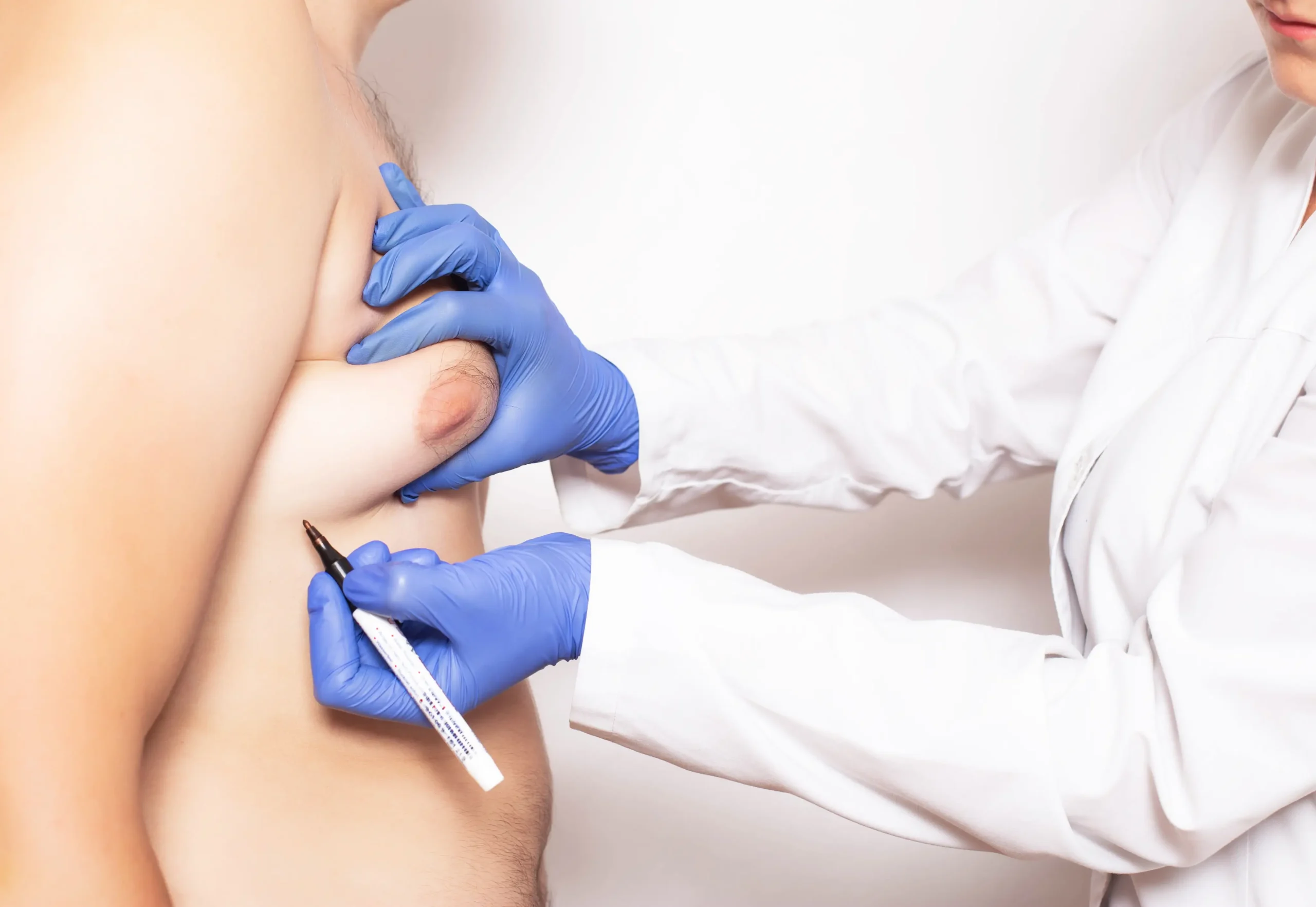
During your initial consultation, Dr Ranieri will carefully evaluate your chest and overall body proportions to determine the nature and extent of your gynecomastia. A thorough clinical examination will help distinguish between glandular and fat tissue components, as this distinction influences the most appropriate surgical technique. You will also have the opportunity to discuss your goals, expectations, and any concerns you may have. He will explain the details of the procedure, including the surgical plan, type of anaesthesia, expected results, recovery timeline, and possible risks or complications. Based on this comprehensive assessment, he will determine whether you are a suitable candidate for male breast reduction surgery and will tailor a personalized treatment plan for you.
Dr Ranieri will design a customized surgical plan based on your individual anatomy and the specific characteristics of your gynecomastia. The surgery is usually performed under general anaesthesia. When the enlargement is primarily caused by fat tissue, liposuction techniques are used. A small cannula is inserted through discreet incisions to remove the excess fat and sculpt the chest. If glandular tissue is present, it is removed through a limited areolar incision, carefully positioned at the inferior edge of the areola to minimize visible scarring. In some cases, a combination of liposuction and direct excision may be required to achieve optimal results. In selected cases, a direct excision of skin and glandular breast tissue through a periareolar approach (an incision made around the areola) may be required. All surgical steps are performed with meticulous attention to detail to ensure smooth chest contours and a natural appearance.
After a male breast reduction procedure, you will experience a modicum of bruising, swelling and soreness, all of which will subside. You will be provided with a tailor-made post-operative recovery plan, outlining medication, rest periods, follow up appointments and when you can return to work. You will need to wear a compression vest after surgery.
After undergoing male breast reduction surgery, you should allow at least 4 to 6 weeks to fully recover. That said, every patient is different, and it depends the type of surgery and how quickly you heal.


Duration of surgery
Approximately 1 hour
Type of Anaesthesia
General anaesthesia
Hospital stay
The same day
Return to work
Usually within 1 to 2 weeks
Complete recovery
Between 3 to 4 months
For us your safety and results are our priority. That’s why it is essential to begin with an initial consultation with Dr. Marco Ranieri. This allows him to understand your needs, explain the best treatment options, and ensure you receive fully personalised care.
By completing this contact form, you acknowledge the importance of attending an initial consultation with Dr. Ranieri before requesting treatment details or pricing.


“Lorem ipsum dolor sit amet, consectetur adipiscing elit. Sed do eiusmod tempor incididunt ut labore et dolore magna aliqua. Ut enim ad minim veniam, quis nostrud exercitation ullamco laboris. Duis aute irure dolor in reprehenderit in voluptate velit esse cillum. Excepteur sint occaecat cupidatat non proident.
Breast augmentation – Age 45
“Lorem ipsum dolor sit amet, consectetur adipiscing elit. Sed do eiusmod tempor incididunt ut labore et dolore magna aliqua. Ut enim ad minim veniam, quis nostrud exercitation ullamco laboris. Duis aute irure dolor in reprehenderit in voluptate velit esse cillum. Excepteur sint occaecat cupidatat non proident.
Breast augmentation – Age 45
“Lorem ipsum dolor sit amet, consectetur adipiscing elit. Sed do eiusmod tempor incididunt ut labore et dolore magna aliqua. Ut enim ad minim veniam, quis nostrud exercitation ullamco laboris. Duis aute irure dolor in reprehenderit in voluptate velit esse cillum. Excepteur sint occaecat cupidatat non proident.
Breast augmentation – Age 45
Gynecomastia refers to the enlargement of breast tissue in men, which gives the chest a more prominent or feminine appearance. This condition often develops due to an imbalance between the hormones oestrogen and testosterone but can also result from certain medications or underlying medical issues. A male breast reduction procedure is a common solution for this problem, alongside hormone regulation, depending upon the severity.
The best way to find out if you’re suitable for male breast reduction surgery is through a consultation with Dr Ranieri, a qualified and experienced surgeon. During this appointment, the surgeon will review your medical history, examine your current condition, and discuss your personal goals to determine the best approach. In general, if you are a man in good health and have realistic expectations of your desired outcome, you could be a good candidate.
Several surgical techniques are available for the correction of gynecomastia, the optimal approach depends on the relative proportion of fatty tissue, glandular tissue and redundant skin. In cases dominated by excess adipose tissue, liposuction is typically sufficient to restore a flatter and more masculine chest contour. When dense glandular tissue is present, often palpable as a firm mass beneath the areola, direct excision through a periareolar approach may be required.
In more advanced cases, where skin redundancy or ptosis is evident, skin tightening or limited skin excision can be performed simultaneously to optimize the final contour. A combined approach, integrating liposuction with glandular excision, is frequently considered the gold standard. The choice of technique is always individualised and guided by anatomical characteristics, degree of hypertrophy and patient expectations.
As with any surgical procedure, male breast reduction involves potential risks and complications, although these are uncommon when the operation is performed by an experienced plastic surgeon. The most frequent risks include hematoma or seroma formation, infection, delayed wound healing, contour irregularities, asymmetry, and changes in nipple–areola complex sensitivity (temporary or, rarely, permanent). These risks can be substantially minimized by selecting a qualified plastic surgeon such as Dr Ranieri, who employs meticulous surgical technique and evidence-based postoperative management to ensure safe healing and optimal long-term aesthetic outcomes.